

Introduction
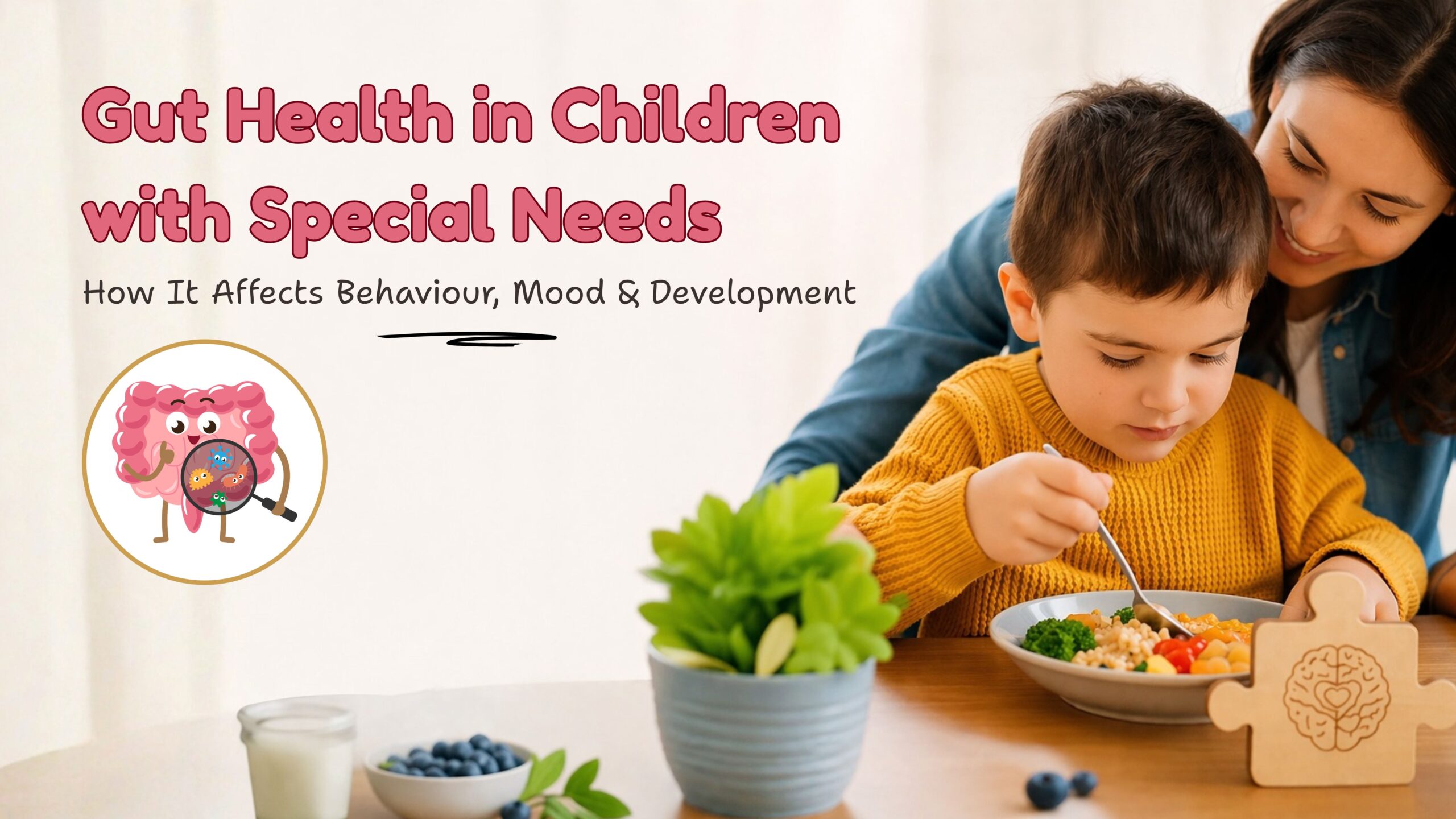
Gut health in children with special needs plays a crucial role in their behaviour, mood, and overall development. As a parent, you may often wonder why your child experiences sudden mood changes, digestive discomfort, or difficulty focusing.
What many parents don’t realise is that gut health plays a powerful role in a child’s overall development.
The connection between the gut and brain, known as the gut-brain axis, means that what happens in your child’s digestive system can directly influence their behaviour, emotions, sleep, and learning ability.
What is Gut Health?
Gut health refers to the balance of good and bad bacteria in the digestive system.
When this balance is healthy, your child’s body can:
When this balance is disrupted, it can affect not just physical health — but also behaviour and emotional regulation.
Why Gut Health Matters More in Children with Special Needs
Children with autism, ADHD, and other developmental conditions often experience more gut-related issues than others.
These may include:
The gut sends signals to the brain through nerves and chemicals. If the gut is irritated or inflamed, these signals can affect:
👉 This is why many parents notice that when digestion improves, behaviour also improves.
Signs of Poor Gut Health in Your Child
As a parent, watch for these early signs:
These signs are often overlooked but can be key indicators of gut imbalance.
The Gut-Brain Connection Explained Simply
Think of the gut as a “second brain.”
It produces important chemicals like serotonin (which affects mood).
👉 When the gut is healthy → signals to the brain are balanced
👉 When the gut is unhealthy → signals can become disrupted
This can show up as:
How to Improve Gut Health Naturally (Parent-Friendly Tips)
Add natural probiotics to your child’s diet:
👉 These help increase “good bacteria”
Fiber feeds healthy gut bacteria.
Add:
Packaged foods, excess sugar, and artificial additives can harm gut balance.
👉 Try to:
Water supports digestion and helps prevent constipation.
Some children react to certain foods like:
If you notice changes after certain foods, consult a professional before eliminating anything.
Children with special needs thrive on routine.
Regular meal timings can support:
Does Improving Gut Health Really Help Behavior?
While gut health is not a “cure,” many parents and therapists observe positive changes such as:
Even small improvements in gut health can lead to noticeable daily changes.
Important Note for Parents
Every child is different.
What works for one child may not work for another.
👉 Always:
Conclusion
Gut health is often overlooked, but it can be a powerful piece of the puzzle when supporting children with special needs.
It’s not just about managing behaviour,
it’s about understanding what’s happening inside your child’s body.
With small, consistent steps, you can help your child feel better, respond better, and grow with more comfort and balance.
FAQs
Yes, research suggests a strong connection between gut health and autism, especially in behavior and emotional regulation.
Probiotic foods like yogurt and fiber-rich foods like fruits and vegetables support a healthy gut.
In some cases, improving gut health may help with focus, mood, and overall behaviour.
At Inspiring Pathways, we specialise in supporting gut health in children with special needs through personalised therapies and holistic care. If you’re looking for professional guidance, connect with our experts today:
👉 https://inspiringpathways.in/contact-us/
© Inspiring Path Ways. All Rights Reserved | Designed By : AimGlobal.digital
What are some early signs of autism that parents in Bangalore should look for?
Autism symptoms can vary, but some early signs include difficulty with eye contact, delayed speech, repetitive behaviors like hand-flapping, and challenges in social interactions. Some children may also be sensitive to sounds, textures, or bright lights. If you notice these signs in your child, it’s best to consult an autism specialist. Inspiring Pathways can connect you with leading doctors and therapists in Bangalore to guide you through the next steps.
Where can I find autism treatment centers in Bangalore?
Bangalore has several well-equipped autism centers, therapy clinics, and hospitals that provide behavioral therapy, speech therapy, occupational therapy, and special education programs. Inspiring Pathways helps parents find the right specialists and therapists near them based on their child’s needs. Simply get in touch with us at +919164062455, and we’ll guide you through the process.
Are there support groups for parents of autistic children in Bangalore?
Yes, Bangalore has several autism support groups where parents can connect, share experiences, and seek guidance. Some active groups include Parent Support Groups at NIMHANS, the Autism Society of India (based in Bangalore), and various online communities on WhatsApp and Facebook. Moreover, Inspiring Pathways can also help parents identify and join the right support networks, whether in-person or online, to make their journey easier and more informed.
How can I access reliable information about autism in Bangalore?
Parents can attend workshops and awareness programs held by organizations like NIMHANS, Autism Society of India, and local therapy centers. Additionally, trusted hospitals and therapy clinics in Bangalore frequently host sessions on autism awareness. Inspiring Pathways provides curated resources and connects parents with experts who offer accurate and practical guidance.
Where can I find good schools for children with autism in Bangalore?
Bangalore has several inclusive schools and special education centers that cater to children with autism. Many institutions offer specialized programs, therapy support, and individualized learning plans to help children thrive. Additionally, some mainstream schools provide special education support to ensure a more inclusive learning environment. Inspiring Pathways can assist you in exploring school options and connect you with the best doctors and specialists who best suit your child’s needs, helping you make an informed decision for their education and overall holistic development.
Is autism caused by bad parenting? Did I do something wrong?
No, autism is not caused by parenting style or personal actions. It is a neurodevelopmental condition influenced by genetic and environmental factors. Many parents in Bangalore go through feelings of guilt and self-doubt, but it’s important to focus on early intervention and therapy rather than self-blame. Inspiring Pathways provides emotional and practical support to help you navigate this journey.
Can autism be cured with alternative therapies like homeopathy or Ayurveda?
Currently, there is no scientific evidence that autism can be cured by homeopathy, Ayurveda, or stem cell treatments. The most effective interventions focus on improving communication, social skills, and overall development through therapies such as Applied Behavior Analysis (ABA), Speech and Occupational Therapy, Special Education, and Sensory Integration. Inspiring Pathways ensures that parents in Bangalore have access to evidence-based therapies and helps them make informed decisions about their child’s care.
How can Inspiring Pathways help parents in Bangalore?
At Inspiring Pathways, we know how overwhelming it can be for parents to find the right care and support for their child with autism. That’s why we are here—to guide you through this journey with compassion and expertise. We connect families with top autism specialists, therapists, and support groups in Bangalore, ensuring access to the best resources. From finding autism-friendly schools and therapy centers to offering guidance on early intervention and daily challenges, we are committed to making this path easier for you. No matter where you are in your journey, Inspiring Pathways is here to support you every step of the way. We are just a call away. Ring us now at 9164062455 for more information.
Online consultation speech, speech therapy, oral placement therapy and sensory integration, special educators, Vocational training centres, Assisted living communities, Disability certificate, Assessment, Will format, Financial planning, Nirmaya health insurance, Swavalamban insurance, UDID, Autism, ADHD, Cerebral palsy, Downs syndrome, Shadow teacher training, Preschool teacher training, NIOS, OBE level A, B,C, Parenting counselling, Parent child program, Structured teaching

